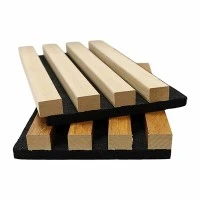


Our Self-Adhesive Polyester Fiber Acoustic Panels combine a porous PET fiber structure with a peel-and-stick backing for interior wall applications requiring sound absorption and a coordinated decorative finish.
Available in 8, 9, 12 and 15 mm thicknesses, with multiple density, color and size options, the panels can be specified for offices, meeting rooms, studios, schools and other interior projects.
As a manufacturer, we support project-based customization, sample evaluation and bulk production according to confirmed technical specifications.
Product Specifications
|
Parameter |
Specification |
|
Product Name |
Self-Adhesive Polyester Fiber Acoustic Panels |
|
Material |
Polyester (PET) fiber |
|
Recycled Content |
Confirm according to selected material specification |
|
Standard Thickness |
8 / 9 / 12 / 15 mm |
|
Density Options |
880 / 1200 / 1500 / 1800 g/m² - confirm available production specifications |
|
Standard Panel Size |
2240 × 1220 mm |
|
Certifications & Testing |
Available documents to be confirmed for the selected product specification |
Acoustic Performance for Project Requirements
Selecting an acoustic panel requires more than comparing a single NRC value. The actual sound absorption performance depends on the panel specification, test method, mounting arrangement and frequency range.
Our PET acoustic panels are available in different thicknesses and densities to support project-specific selection. Buyers can submit their acoustic requirements for technical review and request the available test information for the proposed configuration.
Acoustic performance information available for project review:
- Noise Reduction Coefficient (NRC), where supported by the applicable test report.
- Frequency-specific sound absorption coefficients.
- Panel thickness and density corresponding to each tested configuration.
- Test method, mounting arrangement and test laboratory details.
- Differences between direct-to-wall installation and any tested alternative mounting arrangement.

Installation & Surface Compatibility
The self-adhesive backing of our polyester fiber acoustic panels is designed to simplify installation by eliminating the need for separately applied adhesive on suitable surfaces. For project buyers, the key considerations are substrate compatibility, long-term adhesion, installation labor and the risk of panel detachment after installation.
Substrate Requirements
Suitable surfaces: Clean, dry, smooth and firmly bonded painted walls, finished drywall and other compatible interior surfaces.
Surface preparation: Remove dust, grease and loose particles. Repair uneven areas and allow freshly painted or treated surfaces to dry completely.
Surface compatibility: Textured, porous, damp or powdery walls may reduce adhesion. Test the adhesive on the actual substrate before large-scale installation.

Installation & Adhesion Considerations
Layout planning: Confirm panel dimensions, orientation, spacing and cutting positions before removing the release liner. This helps minimize material waste and alignment errors.
Peel-and-stick application: Remove the release liner, position the panel and press it firmly onto the prepared surface, following the specified installation instructions.
Edge adhesion: Apply even pressure across the panel, paying particular attention to corners and edges to reduce the risk of lifting.
Final inspection: Check panel alignment, surface contact and edge adhesion before completing the installation.

PET Fiber Material and Surface Options
The panels use a polyester fiber structure with a porous surface intended for interior sound absorption. Their lightweight construction and available thickness options allow them to be considered for a range of decorative acoustic wall treatments.
Material and Appearance
Fiber composition: Confirm the PET material specification and whether the selected product contains virgin or recycled fibers.
Thickness and density: Choose the required configuration based on acoustic evaluation, handling and installation requirements.
Surface texture: Review a physical sample to assess the actual fiber texture, surface appearance and color.
Cut edges: Confirm dimensional tolerances, edge appearance and cutting requirements for the project.
Material documentation: Request applicable material declarations and test reports for the selected specification.
Color Selection
Choose from 46 standard colors or submit a Pantone code or physical reference for custom color assessment.
For large projects, approve a physical color sample before bulk production. The appearance of a color can vary under different lighting conditions, so the approved sample should be retained as the reference for production and inspection.
Customization for Project-Specific Requirements
Thickness and density
Select from available 8, 9, 12 and 15 mm thickness options. Density can be specified according to the production range and project requirements. Buyers should confirm the chosen thickness and density as a matched specification when requesting acoustic performance data.
Color selection
Choose from available standard colors or submit a color reference for assessment. For customized colors, confirm the sample under suitable lighting before bulk production. Large projects should use an approved reference sample for batch comparison.
Panel dimensions and cutting
Standard panel sizes and project-specific dimensions can be discussed. Buyers may provide a cutting layout, dimensioned drawing or panel shape reference to confirm feasible cutting sizes, quantities and edge details.
Adhesive configuration
Confirm the required backing configuration and adhesive compatibility with the intended substrate. Where the project involves unusual wall finishes or environmental conditions, provide the surface information before sample approval.
Applications
Offices and coworking spaces
Wall-mounted panels can be arranged in selected areas to help control sound reflections in open offices, collaborative zones and private workspaces. Layout and coverage should be determined according to the room's acoustic needs.
Meeting rooms and conference facilities
Suitable for interior wall treatments in rooms where speech clarity and sound comfort are important. Buyers should consider the room's reverberation characteristics and the amount of acoustic treatment required.
Recording rooms and creative studios
Polyester fiber panels can form part of an interior acoustic treatment scheme. The exact specification and panel placement should be selected to suit the intended recording or listening environment.
Schools and educational facilities
Available colors and panel sizes can support decorative wall layouts in classrooms, libraries and learning areas. Confirm applicable fire and indoor-air-quality requirem
Fire Safety, Environmental and Compliance Documentation
For commercial and institutional projects, the required compliance documents depend on the destination country, building type, installation location and project specifications. Buyers should identify the applicable standards before confirming an order.
We recommend confirming the following items during technical review:
|
Procurement requirement |
Documentation or confirmation |
|
Fire performance |
Applicable fire test report and classification for the exact product configuration |
|
Acoustic performance |
Available sound absorption test report with specimen and mounting details |
|
Material composition |
Polyester fiber material specification and applicable declarations |
|
Recycled content |
Recycled-material declaration or supporting evidence, if applicable |
|
VOC emissions |
Relevant emissions test report, if required by the project |
|
Product identification |
Model, thickness, density and production specification corresponding to the reports |

From Sample Approval to Bulk Supply
Project specification review
Submit your required thickness, density, dimensions, color, adhesive requirements, application and target order quantity. Include technical drawings and relevant performance requirements where available.
Sample and technical evaluation
Review the available material and color samples. Where required, request relevant acoustic, fire, environmental or adhesive test documentation for the proposed specification.
Specification confirmation
Confirm the selected panel configuration, dimensional tolerances, color reference, adhesive details, inspection criteria and packaging requirements. Any agreed deviations should be documented before production.
Mass production and inspection
Manufacture against the approved specification and perform the agreed production checks. Confirm the planned delivery schedule and any inspection requirements for the order.
Export packing and dispatch
Complete packing, carton identification and shipping documentation according to the confirmed order and destination requirements.
Application Scenarios

Factory & Workshops

FAQ
Q: Can the self-adhesive panels be installed on painted walls?
A: They may be suitable for painted walls when the coating is firmly bonded, clean, dry and compatible with the adhesive. A small-area adhesion test is recommended before installation. If the paint is peeling, powdery or poorly bonded, the surface should be repaired first.
Q: Can the panels be removed and repositioned after installation?
A: Do not assume the adhesive is repositionable. Once the panel has been pressed onto a surface, removing it may reduce its adhesive performance and may damage the panel or wall finish. If temporary installation or repeated repositioning is required, discuss a suitable alternative backing arrangement before ordering.
Q: Can these panels be installed on ceilings?
A: Ceiling installation requires separate consideration of the panel's weight, adhesive performance, ceiling substrate and applicable safety requirements. Do not rely on wall-installation suitability as evidence of safe overhead use. Confirm the proposed installation method and any required mechanical support before specifying the panels for ceilings.
Q: Can the panels be used in humid environments?
A: The panels should be evaluated for the actual temperature and humidity conditions of the installation site. Prolonged moisture exposure can affect the material, substrate and adhesive bond. For bathrooms, damp areas or locations subject to condensation, confirm suitability with the manufacturer before ordering.
Hot Tags: self-adhesive acoustic panels polyester fiber PVC, China self-adhesive acoustic panels polyester fiber PVC manufacturers, factory